SAUDI TELECOM COMPANY
From Fragmented Platforms to a Governed Digital Ecosystem
In Brief
Growth left 100+ platforms fragmented.
I aligned brand, journeys, CX/UX/UI into one model.
I directed system strategy, design, and governance.
From design system to STC’s operating model.
Outcomes and Impact
30% delivery speed improved.
100+ platforms unified into one model.
13 Subsidiaries aligned through design-led governance.
Situation
Bold Brand, Fragmented Reality
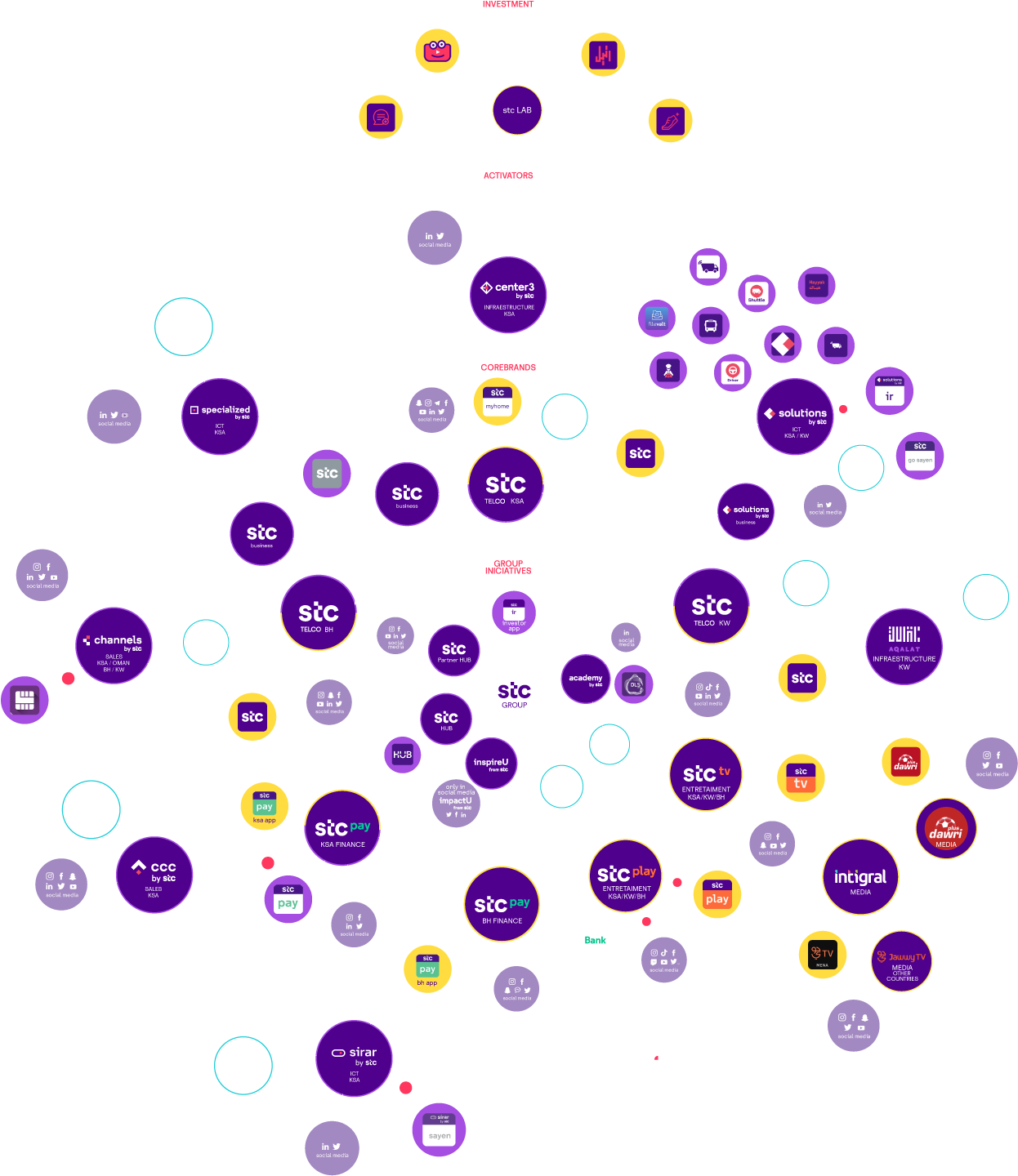
Saudi Telecom Company (STC) had just completed a major rebrand and was expanding fast. Fintech, digital media, TV, and B2B services launched in quick succession across 13 subsidiaries. The ambition was right. The infrastructure was not.
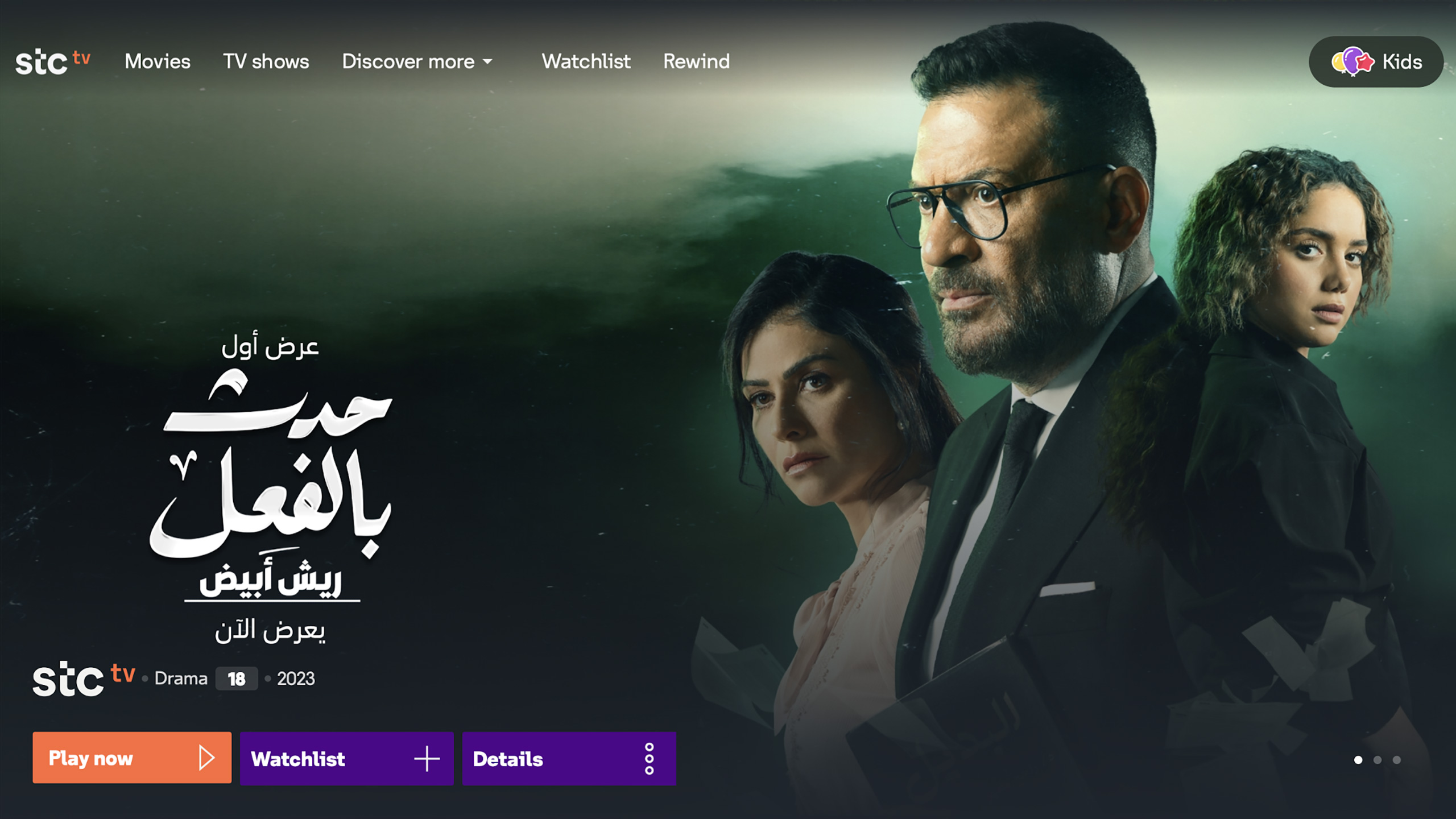
More than 100 platforms were live, each built independently. Journeys overlapped or contradicted each other. Interfaces used different design logic. There was no governance model to hold any of it, and no shared language between design, product, and engineering teams. The brand looked bold on the surface. Underneath, it was fragmenting at every touchpoint.
Executives had visibility of individual platforms but no view of the ecosystem as a whole. Customers felt the incoherence even if they could not name it.
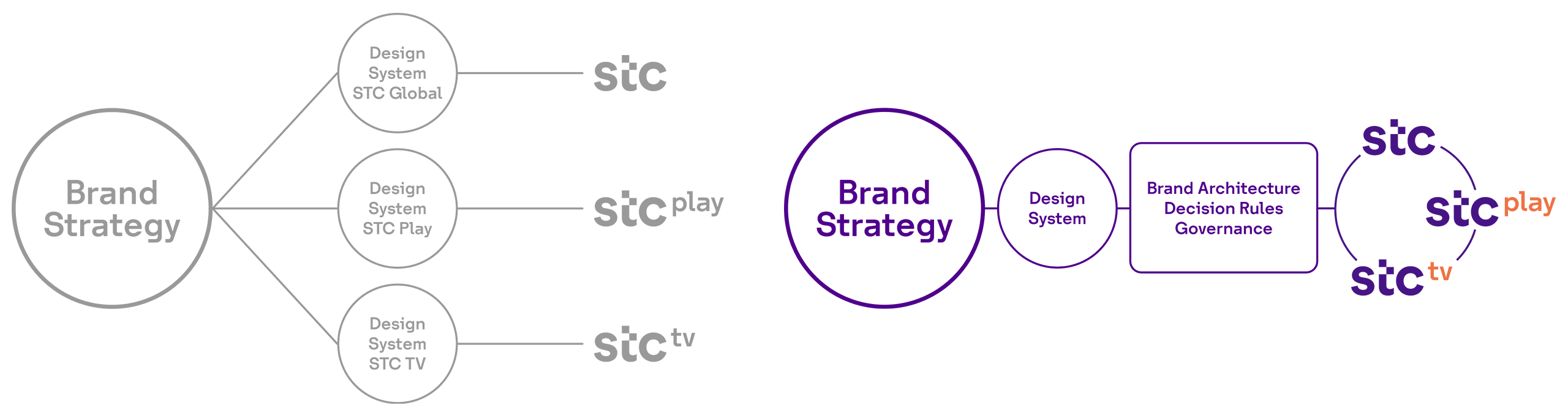
Teams with ambition but no shared decision-making or delivery system: inconsistent communication, duplicated journeys, conflicting interfaces, and patterns.
Approach
Make the Whole System Visible, Then Redesign It
My first move was strategic: map the full scope of the problem before fixing any part of it.
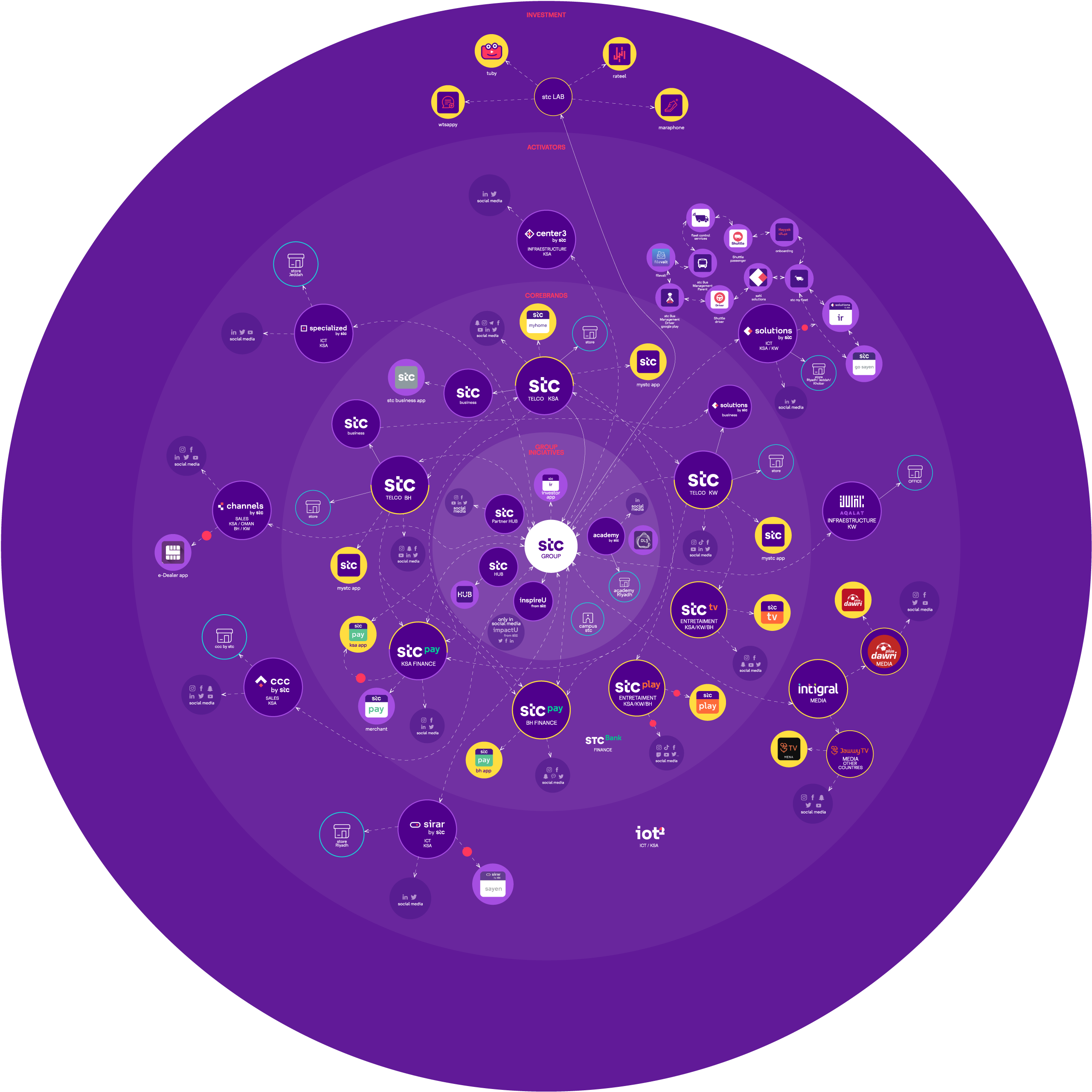
I ran a complete ecosystem audit across every platform, every ownership gap, and every broken flow across B2C and B2B. That gave everyone from product teams to executives a shared, objective view of where experience and delivery were breaking down. Without that view, every fix would have been local, cosmetic, and temporary.
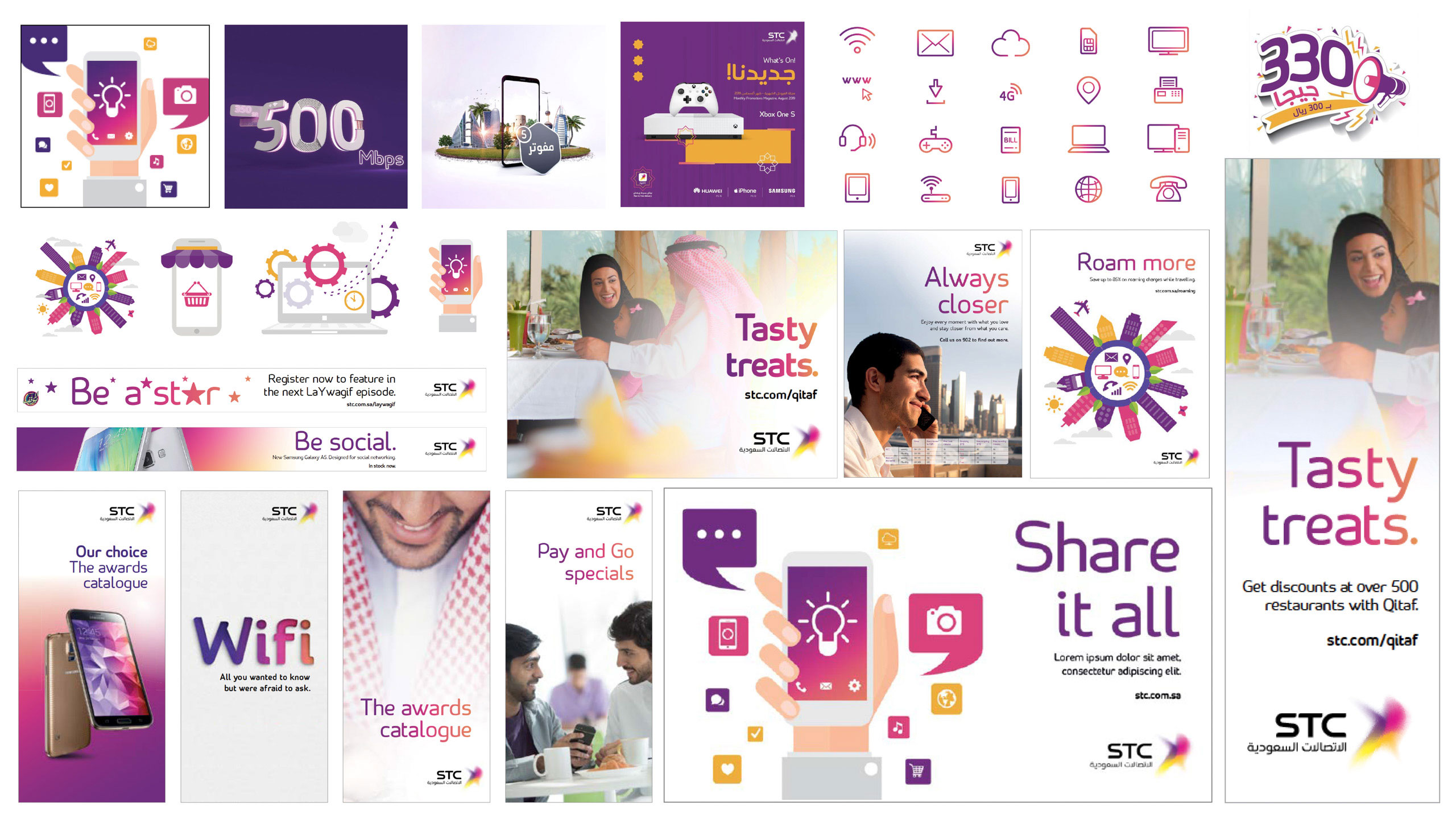
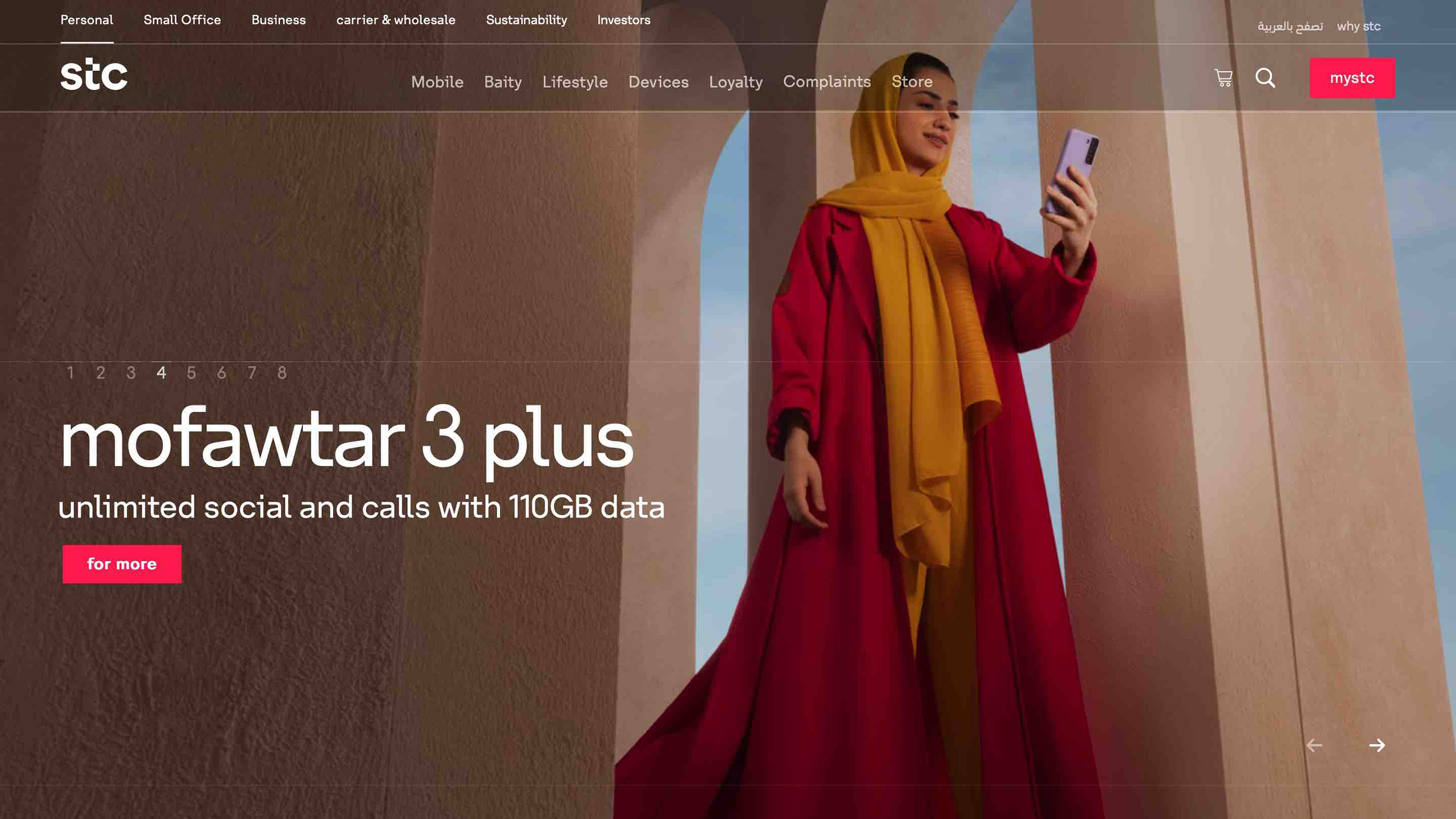
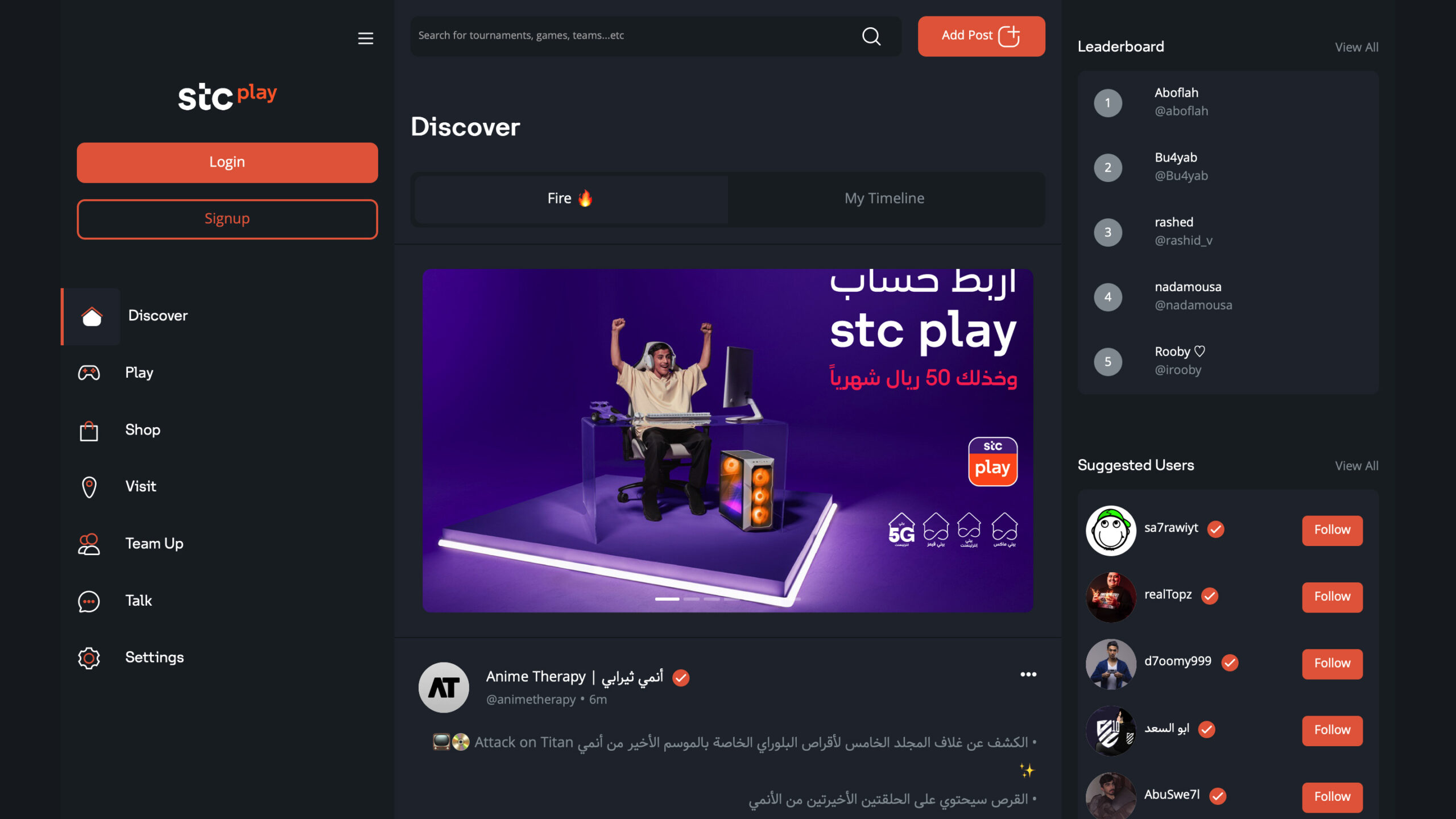
On the brand experience side, I translated the refreshed identity into interface rules that product and engineering teams could apply without returning for a decision each time. Sub-brands like STC Play and STC TV needed to be distinct enough to stand on their own, and coherent enough to belong to one family.
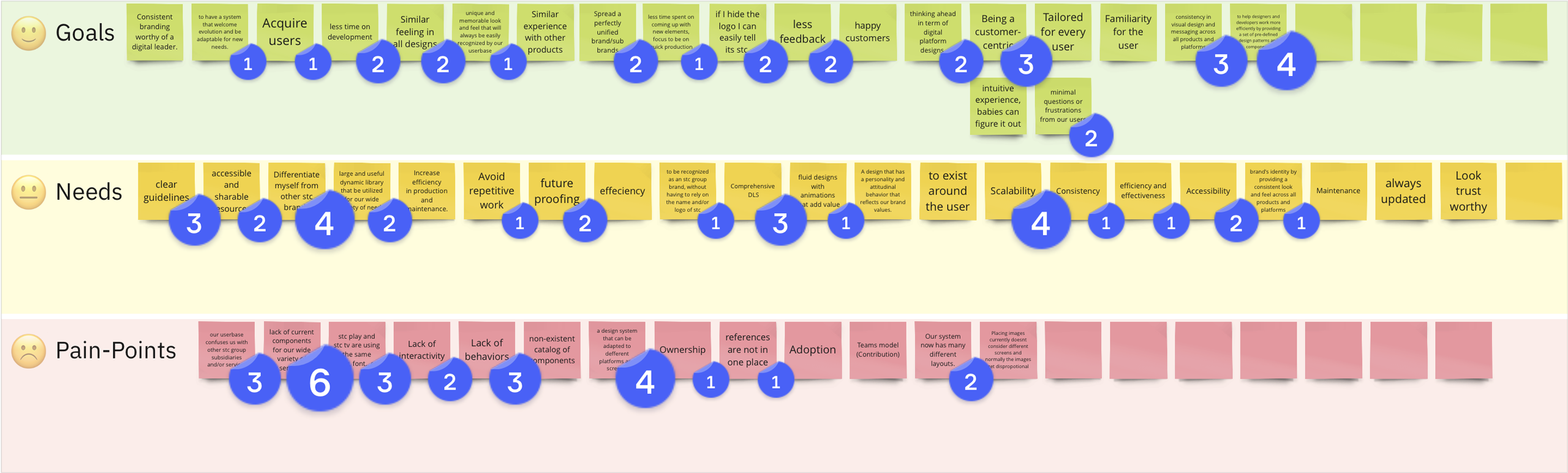
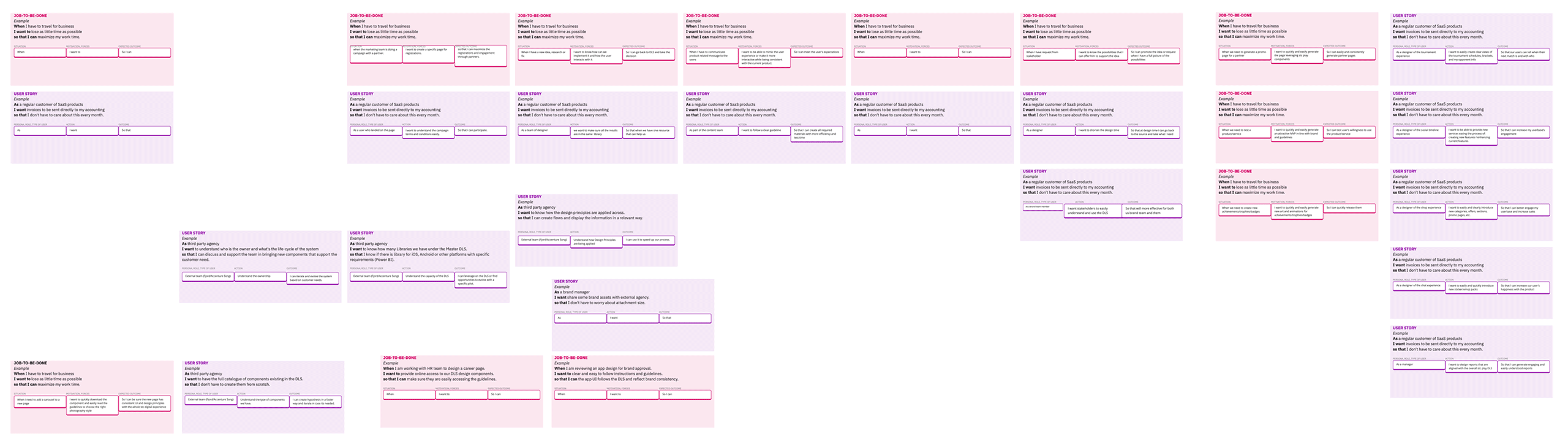
Customer experience work exposed where journeys overlapped, contradicted each other, or simply broke. I ran jobs-to-be-done sessions that brought IT, design, and marketing into the same room for the first time, surfacing where delivery was failing structurally rather than at the surface. Governance sessions with senior leadership ran in parallel, focused on embedding design maturity into how the organisation made decisions, not just how one design team delivered.
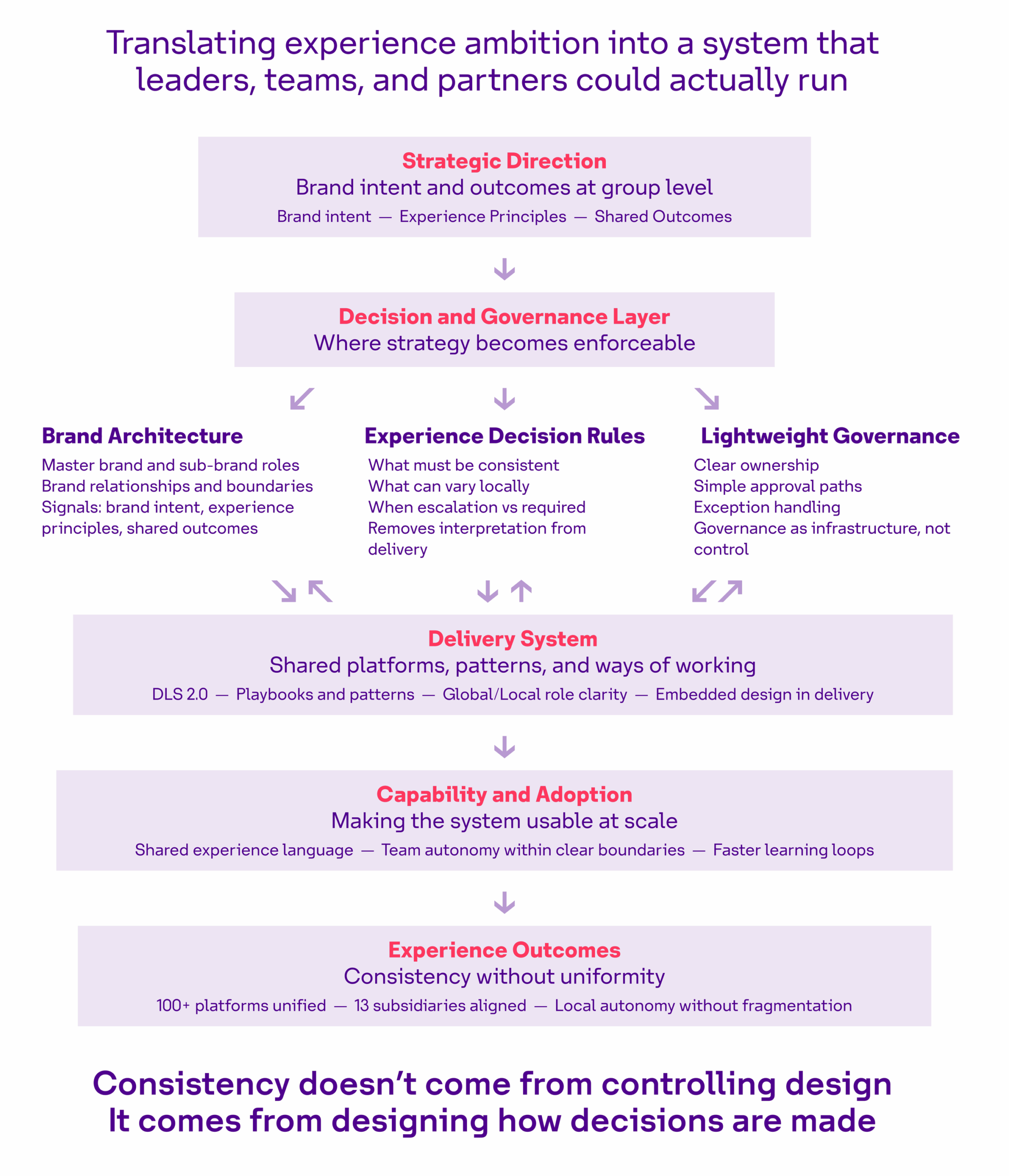
My starting position was this: alignment cannot rely on meetings. Consistency has to be encoded into the system itself.
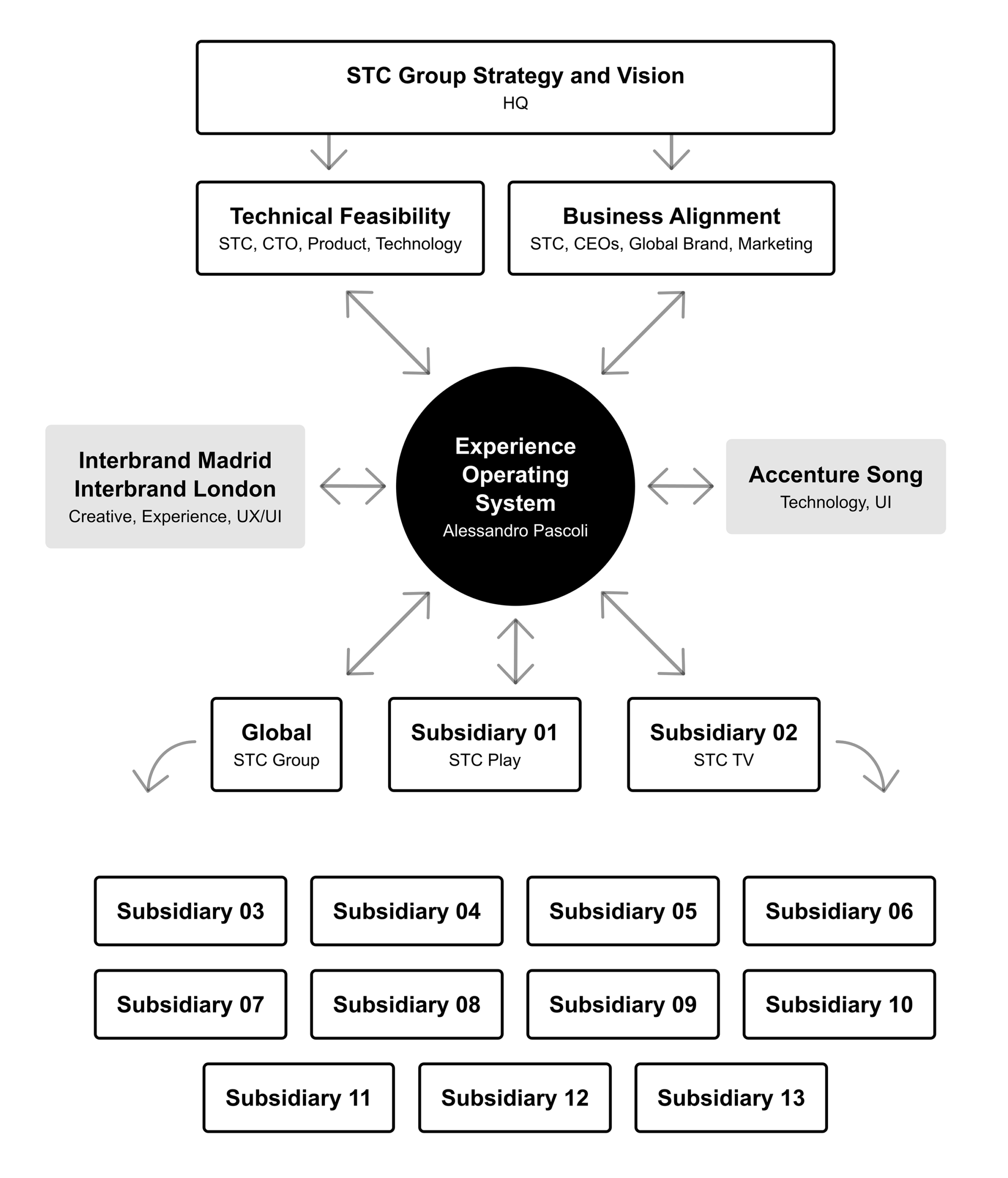
Governance sessions with senior leadership across the group to define decision rights, standards, and onboarding models.
System
DLS 2.0 as Experience Operating Model
The central output was Design Language System (DLS) 2.0, built not as a component library but as the backbone of STC's experience operating model.
I rebuilt over 1,000 inconsistent UI patterns into a modular, reusable component set, each documented with usage rules, states, and accessibility requirements so teams could build correctly without interpretation. Shared standards defined how layouts adapt across devices and channels, how sub-brands flex within guardrails, and what accessible means in practice. Developer-ready playbooks meant adoption did not depend on a designer being in the room.
Documentation alone was never going to change how teams made decisions. I designed onboarding rituals, cross-team workshops, and embedded ceremonies as part of the system from the start. The earlier ecosystem map became a live executive dashboard, giving leadership a view of portfolio performance and showing precisely where new launches would plug in and where fragmentation risks were emerging.
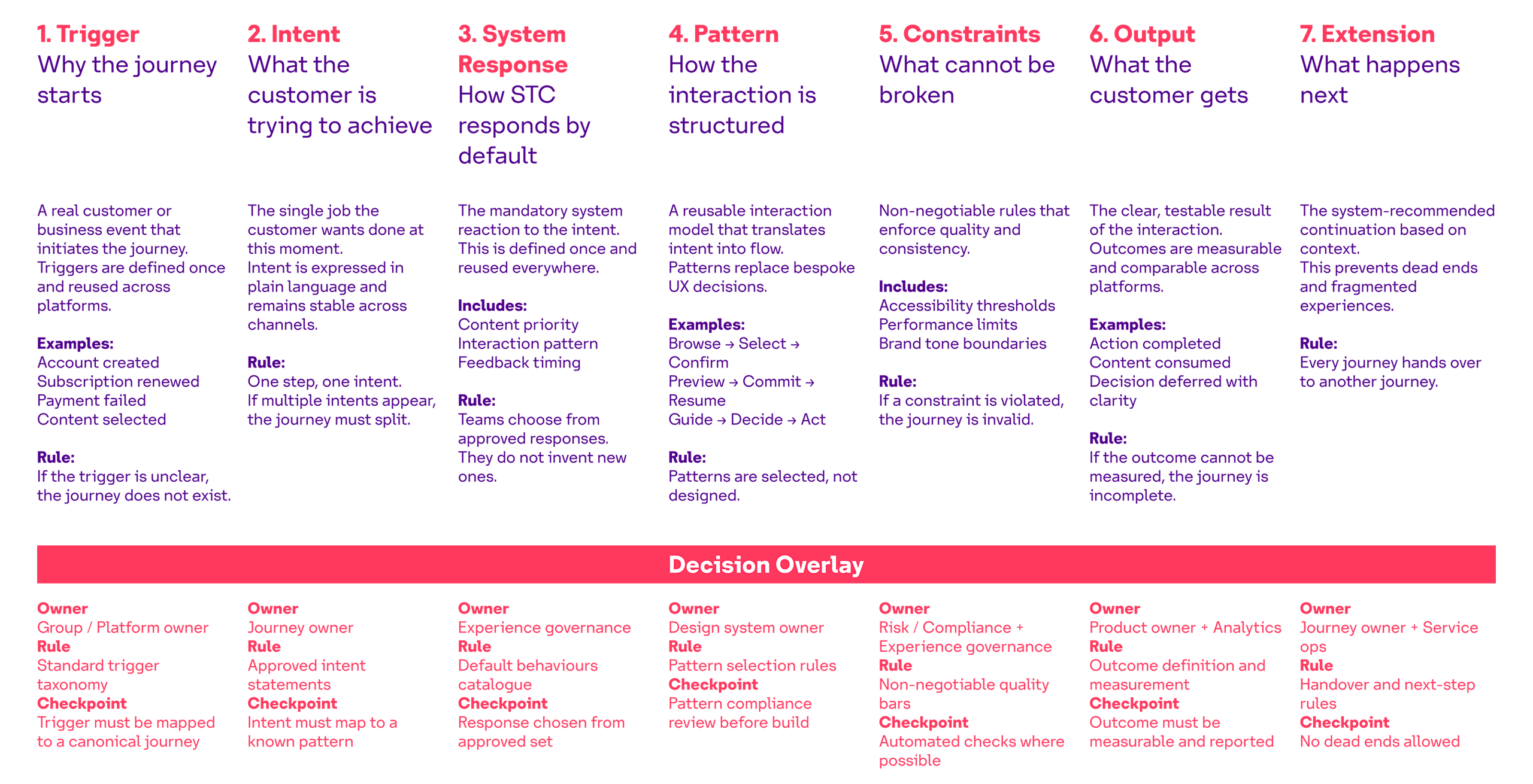
A core journey template structured interactions across seven steps, from trigger to extension, with a decision overlay defining what was fixed, what could vary, and who owned each call. Teams customised content and offers within the journey logic, without needing to reinterpret it each time.
What began as "we need a design system" became STC's digital experience operating model, designed to run without a central design team mediating every decision.
Digital Ecosystem visibility: platform, product line, broken flow across B2C and B2B. This created a shared, objective view of where experience and delivery were breaking down.
Jobs‑to‑be‑done alignment sessions with IT, design, and marketing to surface where delivery was breaking down and why.
The system only worked once the behaviour was co-defined with people who use it.
Core Journey Template that work across B2C and B2B. Adding the decision overlay switched the team’s view from crafting interactions to operational efficiency.
DLS 2.0: brand experience principles became interface rules, reducing alignment meetings.
Once this operating logic sits between strategy and execution, subsidiaries can express the brand differently while behaving consistently.
“We had great talent, strong platforms, and a bold brand, but no way to connect them. Every team spoke a different language. We weren’t designing an experience. We were just shipping fragments."
Internal Product Lead,
STC Group
Outcomes
30% Faster. One Coherent Model.
Experience Systems turned a fragmented digital estate into a governed, scalable ecosystem. Brand experience gave STC's expansion a coherent identity across 100+ platforms; customer experience eliminated the broken flows eroding trust at every touchpoint; and service design built the delivery infrastructure that made consistency repeatable across 13 subsidiaries without central control.
30% reduction in design and delivery cycles.
100+ platforms unified under a single model, cutting duplication and rework.
13 subsidiaries aligned to shared governance, with clear decision rights and escalation paths.
Every subsequent launch builds on the system rather than around it.
Teams reported faster onboarding and fewer decision loops (post-rollout feedback).
Client: STC Group, Saudi Arabia
Sectors: Telecom, Fintech, Digital Media, Technology, B2C, B2B
Role: Director of Experience Design (Interbrand Madrid, London)
Scope: Scale, Fix - System (BX, CX, Operating Model)
Curious how this approach might apply in your context?
Call me Ale