NORWEGIAN REFUGEE COUNCIL & PEOPLE IN NEED
A brand system built for humanitarian recovery in Ukraine
In Brief
NRC & People in Need: new humanitarian consortium, Ukraine.
Shared identity, distinct from founding organisations.
Led naming, creative direction, and visual identity.
Built brand framework with strategy director Nia Evans.
Designed toolkit for non-designers across 6+ formats.
Adopted across both organisations and partners at launch.
Outcomes and Impact
2 founder organisations with distinct cultures unified under one brand identity.
3 audience groups with differentiated communication and interaction principles.
6+ formats covered by the deployment toolkit, built for teams without design support.
Situation
A consortium without an identity.
Norwegian Refugee Council (NRC) and People in Need had formed a consortium to align emergency aid and long-term recovery in Ukraine.
They had complementary strengths, shared values, and a clear mission. What they did not have was a shared identity. Without one, the consortium risked disappearing into a crowded humanitarian funding landscape, unable to signal its combined value to donors or distinguish itself from its two founding organisations.

Approach
From brief to brand logic.
Working as a two-person executive team with Nia Evans, Insight and Strategy Director, we led the work from brief to delivery.
We grounded the strategy in audience insight, mapping positioning across three core distinct groups: people affected by war, institutional donors, and local implementation partners.
From that foundation, I led the creative direction, translating a complex humanitarian brief into a brand system with a clear identity and logic.
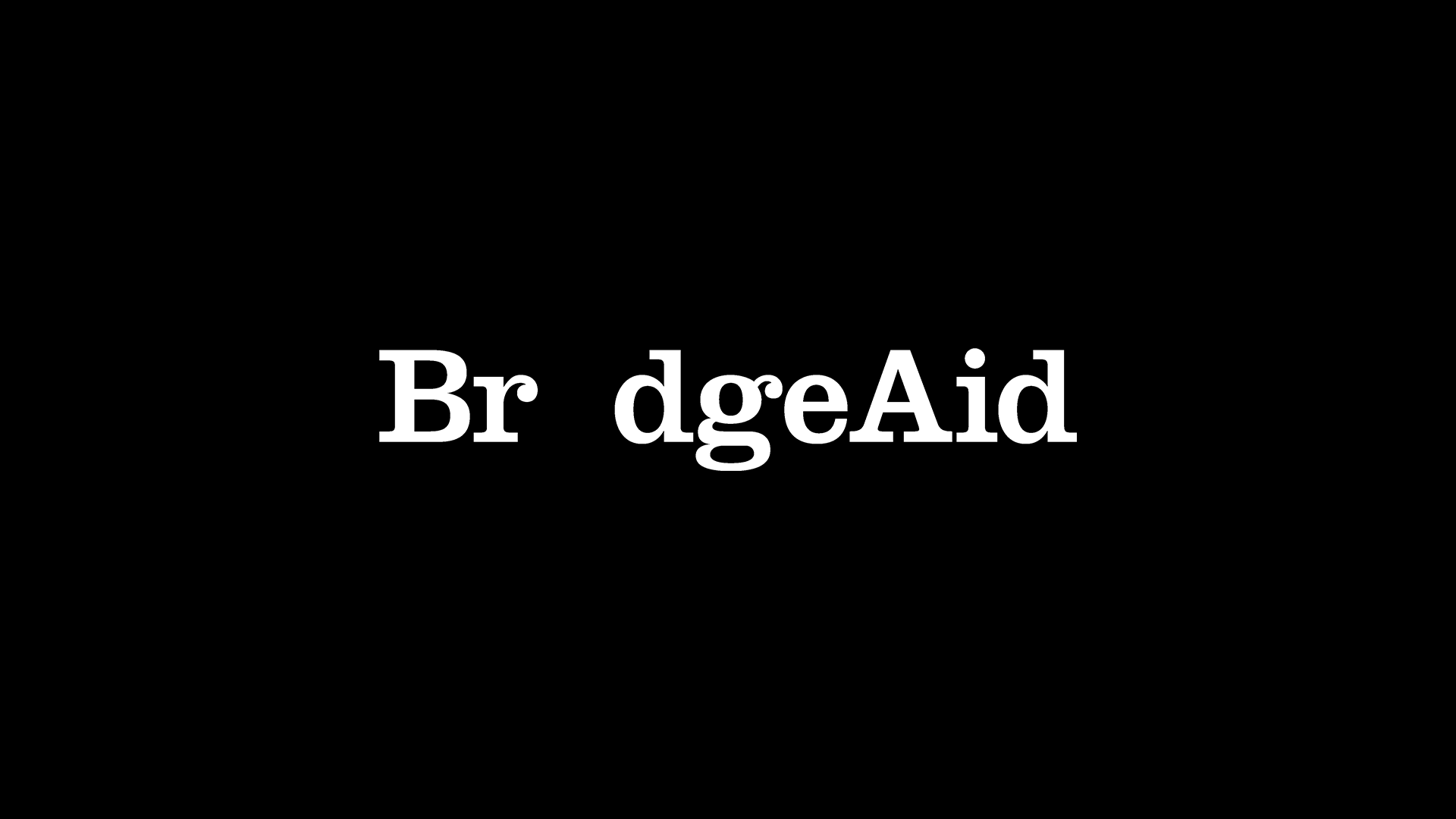
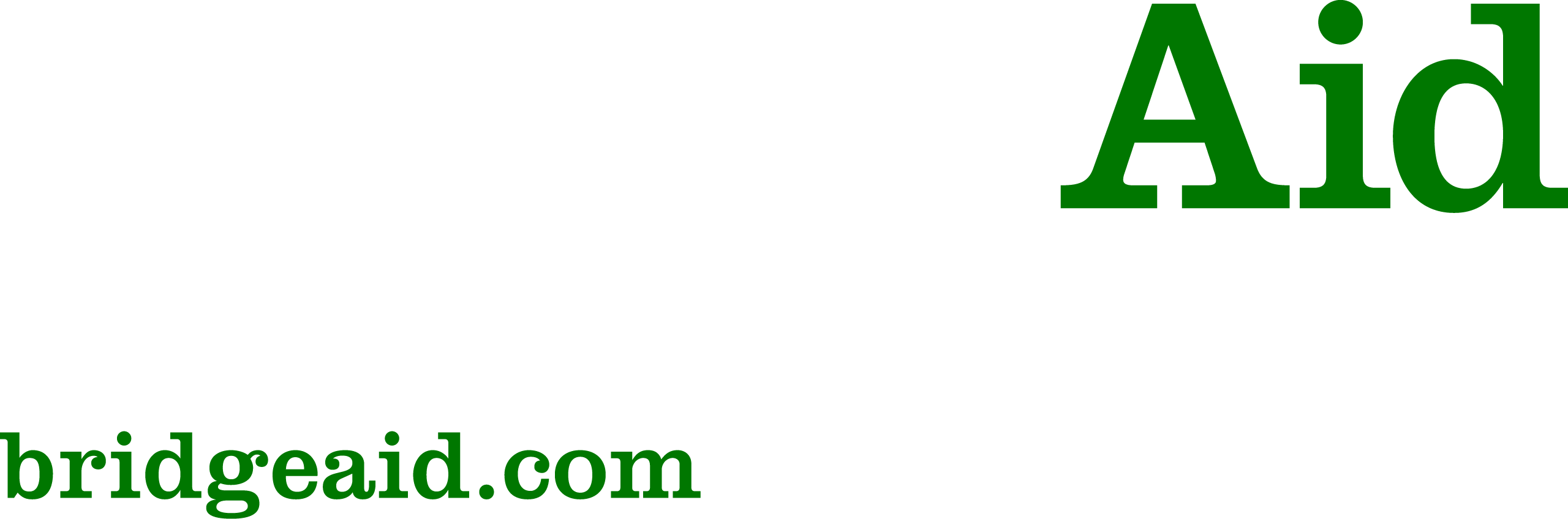
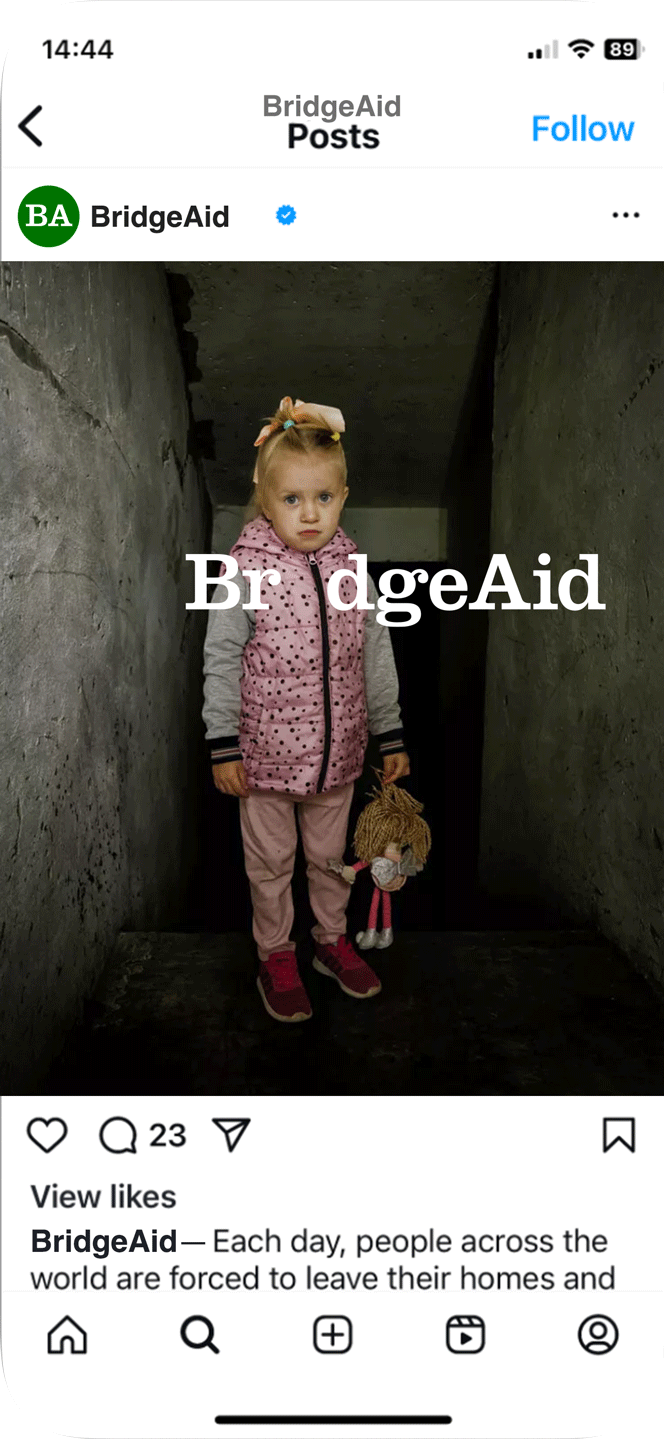
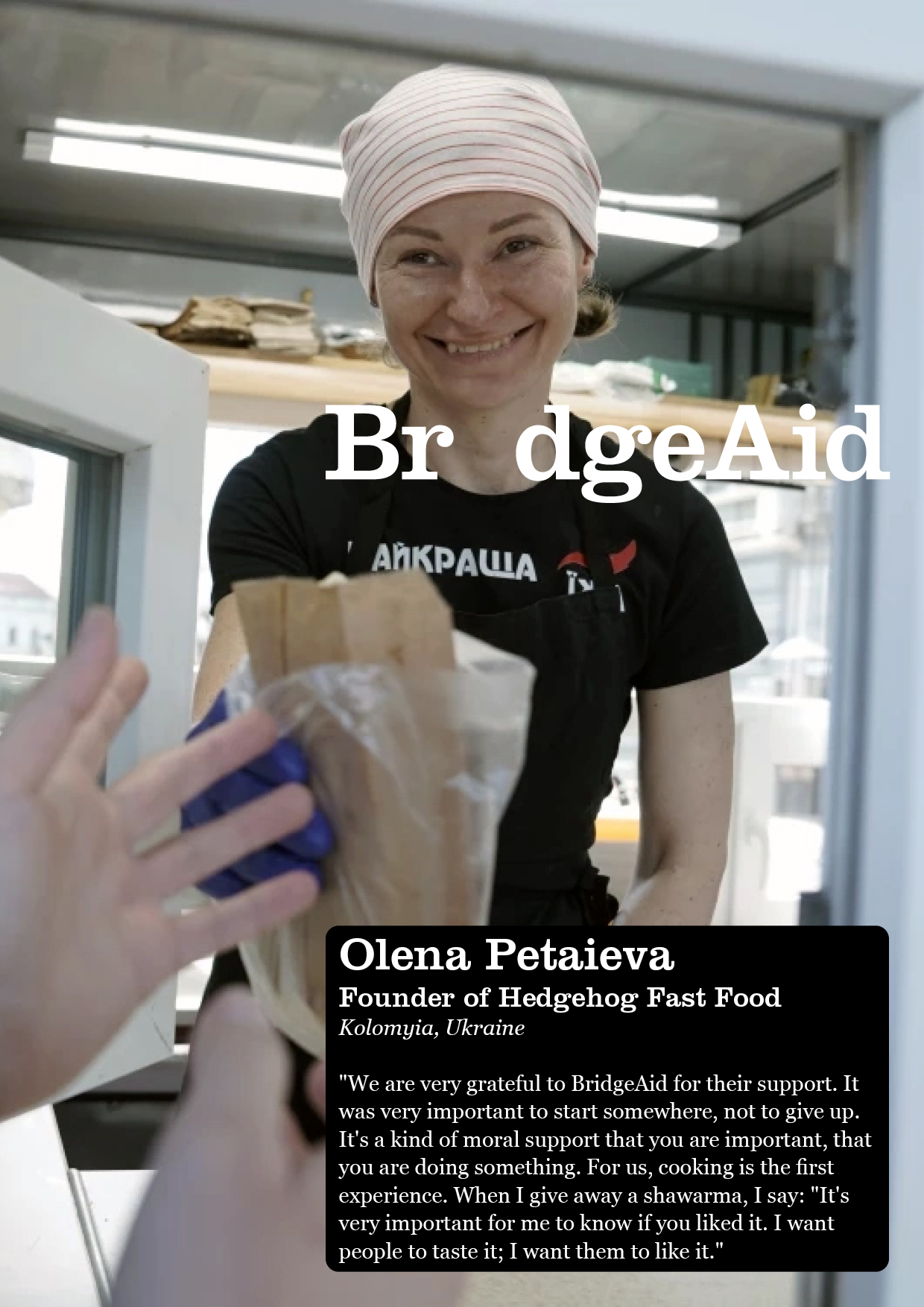
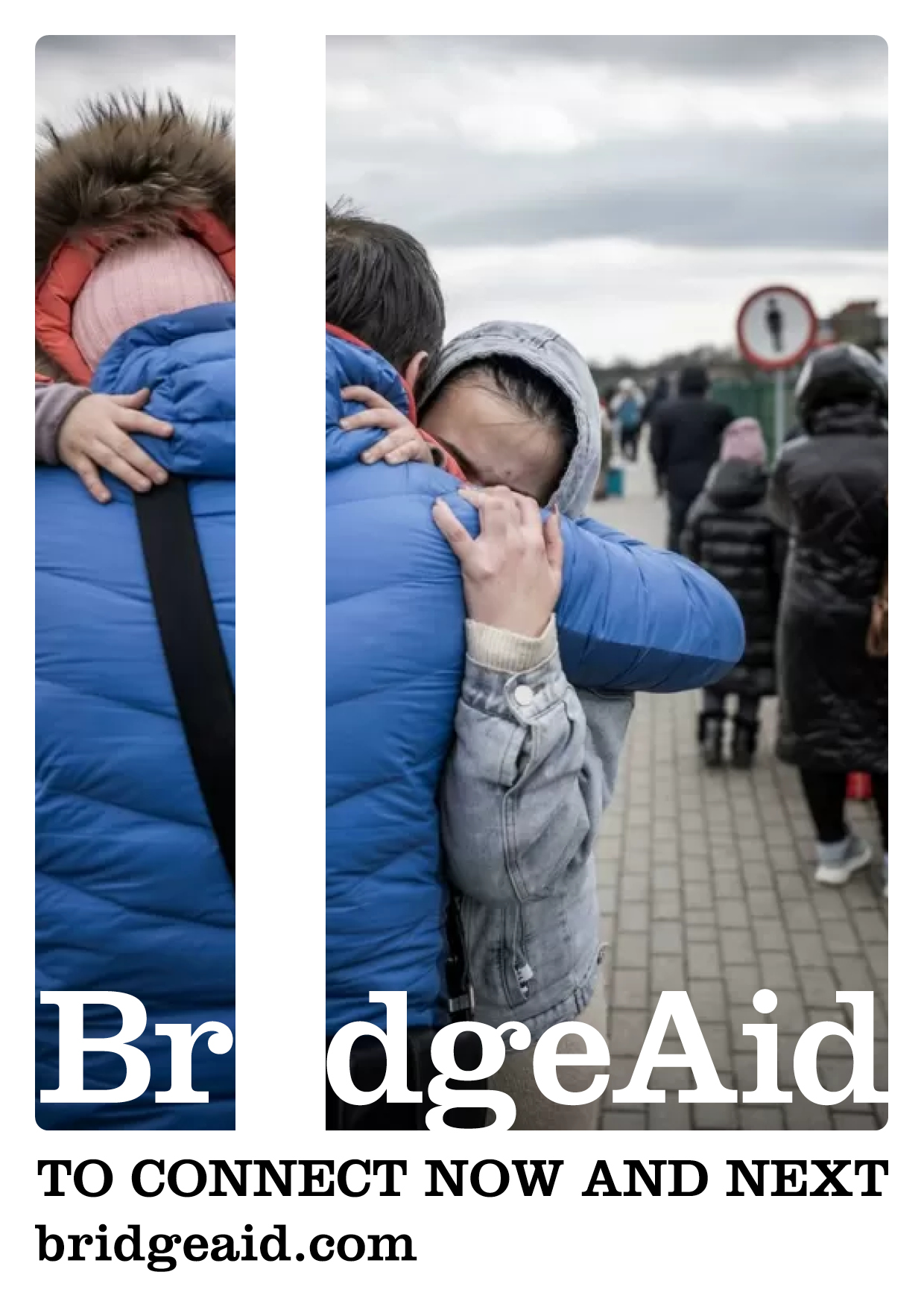
The name BridgeAid came from this process. So did the decision to build the missing "i" directly into the wordmark, a gap that functions simultaneously as problem statement, call to action, and invitation.
The brand experience work shaped every downstream decision: colour and typography chosen for sector credibility and warmth, design principles that ensured all communications carried the same promise regardless of who produced them.
BridgeAid Logo
The effort required to complete the message actively echoes the call to action to complete the ecosystem of donors + people + NGOs.

This intuitive and insightful concept highlights the problem and a call to action. It is also inclusive, inviting the audience to fill the gap and think of possible solutions.

System
Built for the people who use it, not the people who made it.
The service design layer was where the brand became operational. The toolkit covered logo, colour, typography, imagery, illustration, iconography, and grid systems across 6+ formats, from desktop and mobile to social, print, and donor reports.
The gap device was not decorative. It was built into the layout logic so that every format reinforced the same narrative: something is missing, and the audience is part of filling it. Guidelines were written specifically for non-designers working in field conditions, meaning the consortium could activate its identity across fundraising, advocacy, and programme communications without returning to an agency.
The customer experience principles ensured that donors at the policy level and partners working locally received communications shaped by the same underlying messaging, adapted in tone but consistent in intent.
Outcomes
Coherence as a delivery condition.
Experience Systems connected the brand promise, the audience experience, and the operational delivery into a single system that the consortium could own and run without external support, in a context where coherence directly affects funding, trust, and reach.
2 founding organisations with distinct institutional cultures aligned under one shared identity.
3 audience groups served by differentiated communication principles within a single brand framework.
Deployment toolkit built across 6+ formats, designed for non-designer use in field and headquarters contexts.
Brand adopted across partner materials at launch, without external agency dependency.

Client: Norwegian Refugee Council & People in Need
Sectors: Humanitarian, NGO, International Development
Role: Brand & Experience Design Director (Independent)
Scope: Create - System (BX)
Collaboration: Partnered with Nia Evans
Curious how this approach might apply in your context?
Call me Ale